Gear and equipment basics
Paraglider components overview
Wind is a patient teacher, and the gear you choose is its faithful partner. On dawn flights along South Africa’s coast or the quiet lanes outside Cape Town, fabric, lines, and harness whisper a shared vow to rise. The canopy breathes above, and a quiet confidence takes root in the land’s waking light.
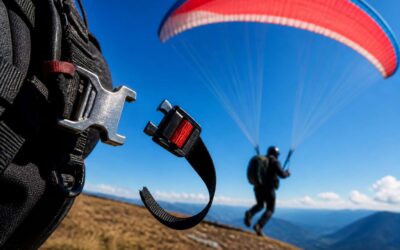
For paragliding for beginners, the gear basics start with the canopy—the wing that catches the breeze. The lines and risers carry energy from the wing to the body, while the harness keeps you snug and upright. A reserve parachute sits ready, and a helmet guards the head as the body learns the rhythm of lift and slope.
- Wing (canopy)
- Risers and lines
- Harness
- Helmet
- Reserve parachute
These components are partners, not props. They carry a quiet care and a respect for wind that echoes rural dawns and open skies.
Harness and reserve system
Dawn over Cape Town’s coast has a way of turning wind into a patient teacher. Gear should feel like a trusted sidekick, quietly lifting confidence and nudging nerves toward a smooth, buoyant glide.
The harness cradles the body with padded straps and a snug back support, distributing weight so you sit tall as the sky writes its script. The reserve parachute hides in a dedicated container with a dependable deployment handle.
For paragliding for beginners, this combo is about trust in the gear and the wind—calm, ready, and welcoming.
- Harness with padded straps and adjustable fit
- Reserve parachute in a dedicated container
- Accessible deployment handle within easy reach
- Regular inspection of lines and connectors (stay mindful, not obsessive)
Helmet and protective gear
Coastal winds near Cape Town can swing from calm to chest-tight in minutes, a reminder that paragliding for beginners is as much about gear as instinct. A snug-fitting helmet and simple protective gear establish the trust needed to meet the sky.
Helmet choices range from light soft-shells to sturdy hard-shell designs, but fit matters more than size. Look for a secure chin strap, reliable liner protection, and a snug wrap that stays put. Eye protection should block wind and debris without fogging; gloves add grip, boots support ankles.
- Helmets: soft-shell vs hard-shell, certified fit
- Eye protection: windproof goggles or glasses
- Gloves and boots: grip and ankle support
In the end, gear mirrors the environment you fly in—read the wind and respect the craft while staying shielded.
Flight accessories and packing
“The sky forgives the ungloved, not the unprepared,” a veteran pilot once told me, and in South Africa’s capricious coastal winds that truth lands with a kiss. It’s the first quiet nudge toward respect for what you carry into the air.
Gear and equipment basics for paragliding for beginners hinge on balance and reliability. Flight accessories, neatly arranged, keep you focused when the wind’s mood shifts.
- Altimeter and variometer combo
- GPS with mapped routes
- Radio with spare battery
- Personal locator beacon
Choose a compact, sturdy pack that rides the harness and protects the electronics without jostling the glider.
In the SA skies—from Cape Town’s coastal mornings to the Highveld afternoons—packing becomes a ritual that honors the wind and the craft, weaving wonder with prudence.
Training and safety fundamentals
Ground handling and kiting basics
Paragliding is a dance with air, not a sprint after speed. ‘The sky rewards the patient,’ says every seasoned pilot. For paragliding for beginners, the ground is the first teacher—patient practice turns trepidation into calm confidence in the sky.
Training and safety fundamentals anchor every session, especially here in SA, where coastal winds and inland thermals add character. Start with weather awareness, a trusted instructor, and thorough equipment checks. Ground handling and kiting drills build line feel and wing awareness on the grass.
Ground handling and kiting basics shape your wind sense. For paragliding for beginners, mastering this ground stage bridges fear and fluent flight. I remind students to keep a low center of gravity and steady hands as the canopy comes alive. If gusts unsettle you, reset and relaunch.
Launch and landing fundamentals
For paragliding for beginners, safety begins long before the canopy leaves the bag. Training and safety fundamentals anchor every session: weather awareness, a trusted instructor, and meticulous equipment checks. Here in SA, coastal winds and inland thermals add character, so planning, awareness, and risk management stay front and center. The aim is calm confidence, not adrenaline-fueled haste.
Launch and landing fundamentals frame your first flights. The takeoff is a quiet, deliberate moment; the body and canopy find balance, then the wing lifts. On landing, speed and flare become a conversation with the ground—subtle, controlled, and confident. Conditions vary, but the rhythm of these bookends helps a beginner stay calm when the air changes.
Body positioning and weight shift
Your body is the hinge between fear and flow. In paragliding for beginners, a mindful stance writes the first line of a calm takeoff and a confident flight. A trusted instructor once reminded me that the wind reads posture the way a storyteller reads a page—you show intention, it answers with lift. In South Africa’s skies, weight shift and body alignment become a dialogue with thermal air and coastal gusts, a quiet, almost supernatural cue that steadies nerves before the wing yawns to life.
When the language of the air clicks, training and safety fundamentals carry you beyond fear into steady confidence, ready for the next horizon.
Emergency drills and risk management
Wind-thin shadows scour the South African dawn, and safety becomes a quiet vow. In training, fear yields to repetition until it dissolves into calm, ritual precision. paragliding for beginners demands more than bravery; it demands a practiced rhythm of emergency drills and risk management that turns chaos into pathways.
I’ve seen how a well-rehearsed response can bend fear toward confidence. We anchor every session with clear procedures, scenario-based drills, and a culture of transparent decision-making—the spine of a safe flight. This is where safety fundamentals become second nature, guiding you from the first push-off to the unspoken conversations with the wind.
- Emergency procedure rehearsals on ground and simulated flights
- Weather discrimination and boundary-setting for flight decisions
- Clear communication protocols with instructors and ground crew
Risk management becomes a living pact, lighting the way for steadier horizons.
Flying techniques for beginners
Basic thermalling and air control
Air is a patient teacher, and thermalling is its quiet conversation. For paragliding for beginners, the first rule is to learn the language of lift rather than chase it. “The wind will tell you where to fly if you listen,” says a veteran of the South African skies. In SA’s sunny ridges and coastlines, thermals shimmer, inviting you to rise.
- Core lift: sense rising air and stay in it.
- Wing feel: observe the wing’s shape and tips.
- Balance: make gentle inputs to maintain calm flight.
- Thermals: form where ground heats; patient motion helps.
Air control is a dialogue between pilot and sky; every tiny adjustment shapes your glide. With listening and patience, the wing becomes a trusted companion over South Africa’s landscapes.
Controlled turns and speed management
Wind is a patient teacher, and in South Africa’s ridges it keeps you honest. For paragliding for beginners, controlled turns and speed management start with listening rather than forcing air to suit your plan. “Wind tells you where to fly,” a veteran SA pilot often says, and the wing will echo that truth if you stay attentive. The trick is to read the wing’s response and the horizon’s line, letting the air carry you rather than pushing against it.
Turns emerge from balance and the wing’s natural arc. Your job isn’t to wrestle with gravity but to stay calm as air shifts around you. Speed follows a quiet rhythm—neither hurry nor lull—so you glide with a measured sense of energy. In this way, the beginner’s art becomes a dance with the sky, a conversation where patience and feel shape every curve.
Take-off technique and flight discipline
Across South Africa’s ridges, wind is a patient teacher. A veteran SA pilot once whispered that take-off is where listening begins—before action, the air speaks. For paragliding for beginners, that truth anchors the moment you lift off the ground.
Take-off technique hinges on a calm, listening rhythm and reading wind whispers. The wing first greets the air with a gentle lift along the hillside line; the horizon becomes a steady reference, not a target to smash. Instead of forcing energy, balance, posture, and trust guide the moment, letting gravity release its grip as air carries you. Flight discipline means choosing flow over force, staying in harmony with every gust, thermal, and shifting slope.
As with every ascent, paragliding for beginners becomes a pact with the sky—a quiet, bright pact that makes the ground feel distant and the air feel alive.
Landing pattern and accuracy
“Touchdown is the last paragraph of a flight,” a veteran SA pilot says. The landing pattern becomes a quiet conversation with wind and terrain.
In South Africa’s broad velds and sea-ridge air, accuracy comes from reading air currents, slope, and timing—letting the craft settle gracefully rather than forcing a final burst.
- Wind behavior near the ground shapes the final glide.
- Terrain geometry and obstacles guide your approach.
- Visual targets and timing anchor your sense of placement.
For paragliding for beginners, this quiet discipline makes the air feel alive and the land welcoming.
Choosing a paragliding school and destinations
What to look for in a training center
Choosing a paragliding school goes beyond price and schedules. For paragliding for beginners, seek a center that blends patient coaching with a clear progression—from ground handling to your first gentle flights. In South Africa, the best programs respect local weather, safety culture, and ethical instruction, weaving those values into every lesson.
Destinations should match skill and nerves. Start on calm coastal flats or sheltered hills, then build to sea cliffs or highveld ridges as confidence grows. The right school maps routes with steady, supervised steps, letting learners absorb air discipline and awe without rushing into exposure.
- Certified instructors with local knowledge
- Structured progression and safety-first mindset
- Well-maintained equipment and proactive risk management
- Flexible scheduling aligned with seasonal weather windows
Certifications and progression steps
Choosing a paragliding school shapes the entire journey for paragliding for beginners. The right center blends patient coaching with a clear ladder of skills, respecting South Africa’s weather and safety culture. Certifications and progression steps act as a compass, turning first flights into steady confidence. We value a ladder of skills that takes newcomers from ground handling to lift-off.
- Local certified instructors with coastal knowledge
- Structured progression and a safety-first mindset
- Well-maintained gear and proactive risk controls
- Flexible scheduling aligned with seasonal windows
Destinations should match skill and nerves. Begin on calm coastal flats or sheltered hills, then ease toward sea cliffs or highveld ridges as confidence grows. A thoughtful school designs the route in measured, supervised steps, letting learners breathe the air, grip the ground handling fundamentals, and enjoy the view without rushing into exposure.
Best beginner-friendly sites and venues
Within South Africa, the journey into paragliding for beginners hinges on the school you choose. A strong program blends patient coaching with a clear ladder of skills, guiding newcomers from the first feel of the harness to confident, responsible launches.
- Local guides who know the coast and wind patterns
- A structured progression that prioritizes safety and steady advancement
- Well-maintained gear and proactive risk controls
Destinations should fit the pilot’s growing comfort. Start on gentle coastal flats or sheltered hills, and gradually venture toward modest sea cliffs or higher ridges as trust builds. A thoughtful school maps this journey in measured, supervised steps, encouraging balance, observation, and a calm horizon.
Gear rental vs purchase
Choosing the right paragliding school can tilt the odds from uncertainty to confident flight. In South Africa’s coastal air, a strong program blends patient coaching with a clear ladder of skills; as a veteran instructor says, structure beats speed. For paragliding for beginners, seek local knowledge, safety-first culture, and gear that’s well maintained.
Destinations should grow with your comfort. Start on gentle coastal flats or sheltered hills, then ease toward modest sea cliffs or higher ridges as trust builds.
Gear rental vs purchase is practical for beginners. In SA, many schools provide reliable rental gear during training, reducing upfront costs and letting you sample rigs. When ready, a purchase can match your progress.
- Cost flexibility and risk management
- Maintenance handled during training
- Upgrades aligned with your paragliding journey
Weather, site selection, and safety planning
Reading wind and weather for beginners
‘The wind is your teacher,’ they say— and the lesson lands hard! In paragliding for beginners, reading wind and weather isn’t optional—it’s safety. Watch for lift near ridges, notice changing directions, and respect sudden shifts that arrive with humidity and sun on the horizon.
- Wind behavior and consistency
- Cloud patterns signaling lift or storms
- Visibility and fronts on the horizon
- Air density affected by temperature and humidity
Site selection matters. In South Africa, open takeoffs with room to drift and a clear escape route are preferable. For paragliding for beginners, a familiar training hill or coast-friendly slope reduces risk and keeps the day comfortable for learners.
Safety planning is a mindset. Pause if conditions shift, and discuss expectations with a guide or buddy. Reading wind and weather for beginners means sensing wind shear, moisture in the air, and the horizon’s cues before committing to a flight.
Site selection criteria
The wind is a patient teacher, and in South Africa it writes the day with a careful breath. For paragliding for beginners, weather is not a backdrop but a living mentor—quiet at first, then insisting on respect.
We read the sky for its signals, letting cloud patterns and light shear guide the mood of the day. In this practice, lift whispers and storms declare themselves in nuance.
- Cloud patterns signaling lift or storms
- Visibility and fronts on the horizon
- Air density affected by temperature and humidity
Site selection matters. In South Africa, spaces with room to drift and a familiar training hill or coast-friendly slope create a gentle canvas for beginners to learn without crowding risk.
Safety planning is a mindset. Pause when conditions shift and keep conversations open with a guide or buddy—a quiet ritual that keeps paragliding for beginners grounded in wonder as well as prudence.
Risk assessment and contingency planning
Weather is not a backdrop; it’s a living mentor. For paragliding for beginners, the sky speaks in lift and lull, and South Africa’s wind teaches with patience—until it doesn’t. Read cloud patterns, watch light, and greet the day with respect.
Site selection matters. In SA, seek open space to drift, a familiar training hill, or a coast-friendly slope that invites gentle courage and minimizes crowding.
Safety planning is a mindset wrapped in Risk assessment and contingency planning—an ongoing ritual that keeps wonder aligned with prudence. The wind’s mood, a guide’s notes, and a buddy’s presence all fit in the narrative, gluing caution to curiosity.
Pre-flight checklists and go/no-go decisions
Weather is a living mentor over South Africa’s ridges. For paragliding for beginners, you read lift and lull, study cloud patterns, and greet the day with respect. A steady breeze invites a smooth start; a sudden puff can flip the script in an instant.
Site selection matters. In SA, seek open spaces to drift, a familiar training hill, or a coast-friendly slope that invites gentle courage and minimizes crowding. Assess access, take-off distance, and the wind’s interaction with terrain before you commit.
- Check current weather and wind direction
- Test gear and reserve function
- Confirm flight plan and exit options
- Run a buddy check and radio/phone plan
Safety planning is a mindset wrapped in risk assessment—an ongoing ritual. The wind’s mood, a guide’s notes, and a buddy’s presence glue caution to curiosity; a clear go/no-go decision keeps wonder aligned with prudence.



0 Comments