The Allure of Paragliding
The Freedom of Flight
Over 588 kilometres is the longest paragliding flight on record. That figure represents the sport’s immense potential. I remember my first soaring flight. The silence was profound. In that moment, the freedom of flight felt like a quiet homecoming. This allure draws pilots to study weather patterns and terrain. It rewards patience with a sensory experience no other aircraft provides. What a privilege to feel the air respond to your fingertips!
The top 5 paragliding places in the world amplify this feeling. They possess unique topographies. Some offer thermals that pulse with regularity. Others provide wind systems that carve lift along ridgelines.
- The delicate balance of temperature gradients
- The sudden surge of a thermal column
- The gentle correction of a wingtip
Each element teaches you something about the air. And each flight leaves you different from how it found you.
Paragliding vs. Other Aerial Sports
Most aerial sports are defined by their machinery. Paragliding is defined by its absence. The allure lies in this simplicity. A skydiver falls. A pilot in a Cessna hears the engine drone. A paraglider pilot sits in silence, suspended from a wing that weighs almost nothing. There is no fuselage between you and the open air. That exposure sharpens the senses.
Skydiving offers a short, intense rush, then it is over. Paramotors provide constant thrust, masking the air. Paragliding leaves the air untouched, allowing you to feel the rising columns directly. Other sports demand equipment mastery. This sport demands self mastery. The pilot who flies the top 5 paragliding places in the world understands this distinction.
The distinctions are:
- Skydiving trades flight for freefall.
- Paramotoring adds an engine that removes the silence.
- Hang gliding uses a rigid frame that blocks the subtle feedback.
Other sports fight the elements. Paragliding works with them.
Why People Seek the Best Locations
Pilots who chase the top 5 paragliding places in the world understand the difference between a good flight and a transformative one. Site selection is everything. A coastal ridge in Portugal produces smooth evening lifts. An alpine launch in the Dolomites delivers raw, powerful thermals. The landscape below shapes the entire experience.
This pursuit often becomes a quiet study. Pilots analyse wind charts, learn local anomalies, and consult site regulars before launching. The reward is vertical travel through scenery that feels entirely foreign. I have watched seasoned pilots go silent at the first glimpse of a new launch site.
They seek:
- Consistent seasonal conditions matching their skill level.
- Legal launch zones with clear landing fields.
- Scenery that justifies the international journey.
Locations that rank among the top 5 paragliding places in the world share these defining elements, and each delivers a sensory impression that stays with a pilot long after the wing is packed.
Key Considerations for Selecting a Paragliding Site
Terrain and Geography
A launch site’s geometry decides your fate before launch. When selecting from the top 5 paragliding places in the world, terrain dictates every outcome. Slope angle controls launch safety; a 15 degree gradient might feel forgiving, a 30 degree face demands respect. Rock outcroppings and tree lines create hazardous turbulence.
I have stood on cliffs where calm air hid dangerous currents. Best sites provide predictable lift zones, clear approaches, and forgiving landing fields. Consider these factors:
- Wind direction relative to the slope, which decides if launch is possible.
- Altitude and valley width, changing thermal formation and flight time.
- Proximity to roads or rescue access, since isolation turns risk into danger.
Geography also matters. Coastal sites bring sea breezes; mountain zones produce ridge lift. Each location balances these elements with brutal elegance. Ignore the terrain, and you risk your life.
Weather and Wind Patterns
At altitude, the air behaves differently than it does on the ground. Wind speed at launch often differs from conditions aloft by 15 knots or more. This discrepancy has grounded seasoned pilots who trusted a single forecast.
For the top 5 paragliding places in the world, weather patterns decide when you fly and when you watch. Thermal strength builds through the morning, peaks by midday, and collapses by late afternoon. Coastal thermals arrive later than mountain thermals. Valley breezes follow their own schedule.
Consider these weather elements before committing to launch:
– Cloud base height, which signals your potential ceiling
– Wind shear near ridgelines, which can flip a smooth flight into chaos
– Hourly temperature shifts that alter thermal intensity
– Forecast data versus live launch readings, since they rarely agree
I once watched a perfect forecast dissolve as sea breeze pushed inland, cancelling a dream flight. Weather changes without ceremony. Respect it, and the sky rewards you.
Accessibility and Local Regulations
Most pilots check the wind twice and the landing zone once, but seldom do they ask whether the launch is even legal. Accessibility and local regulations decide if your paragliding pilgrimage ends in flight or in a conversation with a ranger. Some of the top 5 paragliding places in the world demand a two hour hike with your wing on your back. Others require a shuttle, a permit, and a landowner who tolerates your obsession. Before you rely on a launch, these details matter:
- who owns the launch and the landing field
- whether a daily licence applies
- if airspace rules shift by season
- how rescue vehicles would reach you
Local etiquette matters as much as paperwork. A farmer who grants access once may close the gate after meeting a pilot who ignored the cattle. The top 5 paragliding places in the world thrive because pilots respect the ground beneath the thermals. The sky hosts no fences, but the earth certainly does.
Experience Level and Difficulty
Your paragliding resume is written in altitude, not adjectives. I have watched pilots launch with more confidence than competence. Selecting a site without matching it to your experience level invites a forced landing.
For the top 5 paragliding places in the world, difficulty varies wildly. Some launches are benign slopes. Others demand precise weight shift and immediate decision making. Ask about required glide angle, rotor risk on approach, and landing field width. A beginner should not enter a site known for collapsing thermals.
- Study the site rating and the recommended pilot level.
- Assess how crowded the launch is during peak hours.
- Confirm whether the landing zone allows for a missed approach.
I have seen pilots walk away from a site, and I respect that! Knowing your limits is a skill. The mountain will still be there tomorrow.
A Guide to the World’s Finest Paragliding Destinations
Alpine Escapades in the Swiss Alps
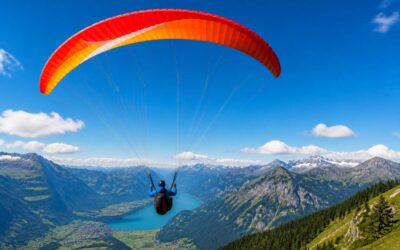
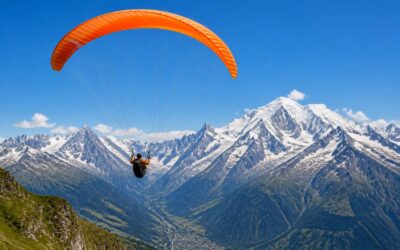
Interlaken is often the starting point, but the true alpine experience begins when you launch from the higher passes. The initial leap from a snowy ridge above the Lauterbrunnen valley delivers a sensory shift that words fail to capture. You trade the crunch of boots on ice for the sudden, profound silence of the air. The Eiger’s north face looms close enough to grasp, its shadow cutting a cold path through the crisp morning light. It is a flight that demands respect, a negotiation between your wing and the unpredictable temperament of the mountain winds.
Beyond the adrenaline, this region offers a unique complexity for pilots seeking to test their mettle against some of the most storied peaks in Europe. The topography funnels the air in ways that require constant attention. For those compiling their list of the top 5 paragliding places in the world, this corner of Switzerland is a non negotiable entry. The sheer scale of the landscape dwarfs the human element, reminding you that you are merely a guest in this vertical world. The thermals here are not gentle; they are powerful columns of rising air that demand precise handling. You will find no forgiving meadow landings, only the precise, technical approaches that separate casual flyers from seasoned aviators. The peaks become your landmarks, the valleys your arena, and every flight becomes a story etched into memory.
Coastal Flying in Brazil
Take off in the morning and the Atlantic is already busy. In northeastern Brazil, the sun heats the sand early, and by ten o’clock the sea breeze arrives as a firm, consistent pressure against your wing. Launch from a dune at Piauí or from a cliff above a fishing village. Within fifty meters you are climbing in a column of air shaped by the meeting of warm land and cooler ocean.
- High dunes force a short, active launch with immediate clearance over scrubland.
- Cliffside sites let you step straight into a wide channel of compressed air.
Many pilots who travel the top 5 paragliding places in the world find that Brazil requires less time spent guessing about launch conditions. The wind shows up, you show up, and your own skill decides the rest!
Deep Valley Flights in Nepal
There is a moment over the Seti River gorge where the air goes quiet. The cliffs of the Annapurna range press inward, and the valley below pulls your gaze into a corridor of rock and shadow. In Nepal, deep valley flying is not a glide across open ground. It is a descent into a confined space where thermal currents bounce off sheer walls and push you upward without warning.
Pilots who seek the top 5 paragliding places in the world come here for that contact with something vast and indifferent. The launch at Sarangkot gives a straight shot toward Phewa Lake, but the real test begins when you turn south and let the valley swallow you. The wind behaves differently here.
- Lift arrives in sudden surges.
- The radio crackles with rotor warnings off the eastern ridge.
- Your own heartbeat becomes the loudest sound.
Desert Thermals in the United States
The desert thermals of the American southwest arrive on their own schedule. The sun strikes dry ground, and heat releases in discrete columns that lift you with a force you feel in your ribs. No cloud cover softens the day. Only the horizon, the heat, and the silence between climbs.
A pilot chasing the top 5 paragliding places in the world will find the United States earns its place through severity. The air is honest. Density altitude changes your glide. The desert does not forgive miscalculation.
Some characteristics matter more than others:
- Solar angle determines when the first usable thermal forms, often near midday.
- Dry air produces sharper, more energetic lift than humid coastal air.
- Landing options grow scarce away from paved roads.
The American west remains a proving ground. It does not offer the drama of mountains. It offers a landscape that requires your full attention.
Island Soaring in Greece
The Aegean Sea offers a different form of aerial persistence than the American desert. Island soaring in Greece depends on a daily rhythm that feels ancient, a collaboration between the sun and the sea that has been paid out for millennia. A pilot seeking the top 5 paragliding places in the world will find that the Greek islands do not offer the raw force of the desert, but rather a structured, dependable lift that arrives with the morning breeze.
The air here is tactile, carrying the scent of thyme and salt. The limestone cliffs of Crete and Rhodes absorb heat quickly, generating strong coastal thermals that rise against the cool sea air. This collision creates a defined, razor sharp convergence zone that runs along the windward side of the islands. Your flight becomes a form of negotiation with that invisible line.
Specific characteristics define the Greek flying experience. The meltemi wind, a seasonal northerly, can create turbulent rotor conditions in the lee of the mountains. Contrast this with the gentle sea breeze cycles of early summer. The terrain offers a mosaic of landing zones, from sandy coves to olive groves. However, the rocks are unforgiving and the distances between safe options can be significant. Success requires a precise reading of the local cloud formations, especially the small, flat clouds that mark the tops of strong thermals.
The flight path often traces the contours of the coast, moving between rugged headlands where the whitewashed villages cling to the slopes. One can spend an entire afternoon climbing over a single ridge, watching the shadows of the clouds move across the water below. The sensation is less about raw survival and more about a harmonious partnership with the Mediterranean climate.
Key considerations for the island flyer include:
1. The consistency of the diurnal cycle, which reliably produces flyable conditions from late morning until evening.
2. The quality of the air, which stays smooth and laminar away from the steep lee slopes.
3. The need to manage your glide angle carefully to clear the numerous rocky spines that jut into the sea.
Greece does not test your resilience like the American west. Instead, it asks for precision and patience, rewarding you with airspace that feels both wild and refined.
Seasonal Timing and Weather Mastery
Understanding Thermal Dynamics
Seasonal timing separates an ordinary flight from a transcendent one. I have watched pilots at launch overthink instrument data, only to miss the subtle change in cloud shadows that signals a working thermal. In the top 5 paragliding places in the world, the seasons dictate survival, comfort, and even sanity.
Thermal dynamics hinge on solar angle and surface composition. Spring often produces aggressive, punchy columns. Autumn offers smoother, dependable cycles. But each location demands its own calendar.
- Himalayan pre-monsoon months create predictable valley winds.
- Coastal sites favor late afternoon sea breezes.
Few pilots study this hard. Yet the ones who do return with stories that sound exaggerated. That is the quiet reward of weather mastery!
Prime Seasons in Different Hemispheres
Every hemisphere keeps its own clock. When the north cools, the south warms, and the thermal window rotates like a slow wheel. The top 5 paragliding places in the world reward pilots who know that travel itself is a form of timing.
In the Northern Hemisphere, prime season spans April through October. In the Southern Hemisphere, it shifts to November through March. A pilot can fly twelve months by crossing the equator, but the crossing demands constant recalibration.
- Northern hemisphere: April to October
- Southern hemisphere: November to March
The two windows do not align. They overlap only in the equator’s narrow band, where seasons blur entirely. Pilots who chase these windows return with reliable flights, while those who fly on instinct alone often sit grounded.
Reading Meteorological Signs
I have learned to read the sky through direct observation. Cumulus clouds building by midmorning signal reliable thermals, while flat grey ceilings mean a grounded day. Wind direction shifts before a front arrives, and barometric pressure drops.
- Cloud development and shape
- Wind speed and direction changes
- Pressure trends over three hours
These signs matter more than any forecast. The top 5 paragliding places in the world reward pilots who master them. In each location, local patterns repeat, but only the observant catch the subtle variations. I once waited out a blue sky in Brazil, then launched when a single cumulus formed. That flight taught me patience.
Planning for Optimal Flight Conditions
Timing a paragliding trip is less about luck and more about precision. I have shown up in Nepal during the monsoon and watched clouds swallow the launch. Once. The top 5 paragliding places in the world each have a reliable window, and missing it means missing the flight. For planning, I use three checks:
- Compare the historical wind archive for your target month, not just the forecast.
- Check sunrise times to plan for early thermal development.
- Look at the moon phase, because strong lunar tides stir coastal air.
That last one feels like folklore until you fly in Brazil. The best pilots do not chase good weather. They wait for it, then move fast.
Ensuring Safety and Maximizing Enjoyment
Essential Gear and Equipment Checks
Every pilot discovers that the top 5 paragliding places in the world demand more than just courage. The air over Nepal’s ridges or Brazil’s coastal cliffs exposes any weakness in your preparation.
Before launching, I inspect my wing, lines, and harness with care. Check the risers for wear, confirm the reserve handle is secure, and test the radio battery. These checks take five minutes, yet they protect every hour of airborne freedom.
- Inspect the canopy for tears or porosity damage
- Verify all carabiners are locked and load-tested
- Confirm your helmet and vario are functioning
For the top 5 paragliding places in the world, local conditions present unique challenges. A desert thermal in the United States may require extra moisture, while a Swiss alpine launch demands warmer layers. Matching your gear to the landscape preserves the joy of flight.
Partnering with Certified Instructors
Some pilots treat instruction like a passport stamp. They collect flights, not wisdom. Then they arrive at one of the top 5 paragliding places in the world and discover that a local mentor is the difference between a mediocre hop and a transcendent glide. I have seen eager flyers skip the briefing, only to spend their afternoon wrestling with rotor off a lee slope. That is an expensive way to learn humility.
A certified instructor translates the landscape for you. They know which Brazilian cliff offers a forgiving launch and which Swiss meadow hides a sneaky crosswind. Here is what a proper mentor provides:
– Site-specific hazard mapping for the top 5 paragliding places in the world
– Real-time decision frameworks for sudden weather shifts
– Post-flight debriefs that refine your judgment, not just your ego
The financial cost of a course is trivial compared to the price of a rescue. For South African pilots eyeing Nepal or Greece, a professional ground handler is not a luxury. It is the most reliable insurance policy you can pack. Their eyes on the sky keep your joy intact.
Local Flight Protocols and Etiquette
Every site in the top 5 paragliding places in the world operates on its own rhythm. Pilots follow patterns that never appear in a manual. I pause before my first launch, watching takeoffs, preferred landing approaches, and pockets of air that local pilots avoid.
Respect the launch queue. Waiting for the correct cycle is not patience; it is shared survival! When the wind turns, the window closes for everyone at once.
- Yield to the pilot flying level with you and closer to the ridge
- Announce landing intentions before the final turn
- Keep the launch zone free of loose gear
A nod between pilots conveys more than any radio call. South Africans arriving at unfamiliar sites learn more from quiet observation than from assertive launches. The sky above the top 5 paragliding places in the world holds everyone’s flight when each pilot honours the unspoken order that keeps the airspace calm.
Pre-Flight Physical and Mental Preparation
A pilot who skips the pre-flight body check trades hours of airtime for a single moment of regret. Before any launch at the top 5 paragliding places in the world, I run through a personal ritual that blends physical readiness with mental clarity.
Hydration matters more than adrenaline. Dehydration dulls reaction time, while exhausted muscles fail on landing. I also stretch my hips and shoulders, the joints that carry every weight shift. For the mind, I spend two minutes breathing in a slow rhythm, visualising the launch and the landing zone.
- Check your energy levels honestly
- Loosen tight muscles with targeted stretches
- Clear your head with a short grounding routine
These small steps keep me present when the wind picks up. The sky over South Africa or abroad rewards preparation, not luck.
Capturing Memorable Moments Mid-Air
Those first silent seconds off the ridge carry a truth: the top 5 paragliding places in the world reward pilots who respect their limits. The wing settles overhead, the harness bites, and I keep my hands light. Safety surfaces as a quiet discipline. The enjoyment follows on its own.
At 2,000 metres over the valley, the ground shows green fields and long shadows. I feel the freedom that draws so many to the top 5 paragliding places in the world.
Mid-air photography asks for patience:
- A settled wing before the shutter
- The sun behind the lens
- A level horizon in the frame
- A thumb that works without looking
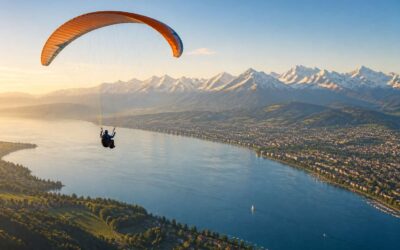
I use a wrist-mounted camera. The sunset light bends through dust and moisture, producing frames that look invented. They are not! We carry these images home as proof of a rare partnership between pilot and air. The photograph reminds you.

0 Comments